A couple of weeks ago in the Tate Modern was an exhibition entitled Energy and Process. The exhibit focuses on "artists’ interest in transformation and natural forces". One piece I found particularly striking, and relevant to my blog.
Roger Hiorns: a British Artist nominated for the Turner Prize in 2009. In 2006 he created Untitled.


The Tate Modern summarises the sculpture as:
A BMW car engine covered in bright blue copper sulphate crystals, held aloft on top of two steel poles that rise vertically from a three-sided steel pedestal. Between two steel shelves within the pedestal lies a smaller, detached segment of the engine, which is also covered in blue crystals. Hiorns created the crystals by placing the engine parts inside a tank filled with copper sulphate solution to initiate a chemical reaction that produced the brilliant blue surface accretion. Over time the colour will lose its saturation as the crystals dehydrate.
I think the sculpture is an interesting twist on the relationship we have with nature. Global environmental change has occurred over the past few hundred years on a massive scale. This has led us to engulf and transform natural processes and alter the world we live in. Here, I think Hiorns has reversed this process. Hiorns has grown crystals to engulf, and make unusable, a car engine; an object symbolic of humans dominance over our planet.
Hiorns reversal of what we are doing to the planet, whether he intended for me to interpret it as I have or not, is brilliant.
This work directly relates to future electricity supply. In providing electricity supply we have dominated the physical environment we live in and are now morphing it at catastrophic rates. The slowing of this process is vital to prevent Earth from becoming unusual and completely engulfed, as this engine has been. Over time, the crystals will begin to lose their colour, which could relate to the potential for us to reverse the damage we have caused.
Following the 'Symphony' regime I spoke about previously in my blog can achieve electricity production without destroying the Earth, the reverse (Jazz) could have serious consequences.
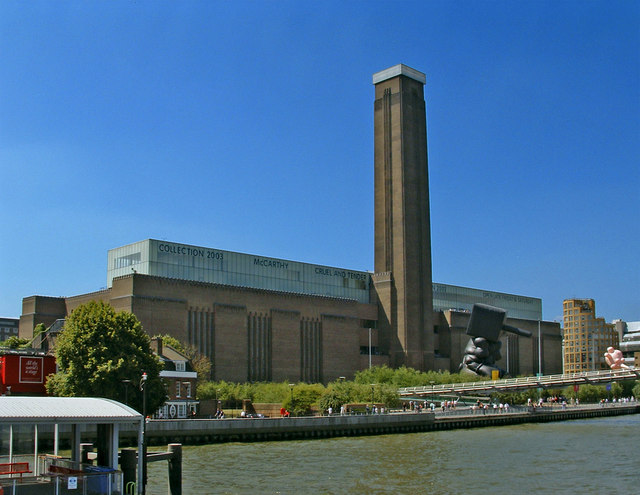 |
| The Tate Modern (Source) |

I really enjoyed reading this post and the way you connected a deeper meaning to this art work. I think we can already see that some of our 'morphing' of the natural environment in order to supply our economies with electricity is being upheld by natural processes. An example that comes to my mind is the Earth-quake and following tsunami resulting in the Fukushima Daiichi nuclear disaster in 2011. Can you think of any other such examples, in which the nature's forces have shown power over anthropogenic processes to create electricity?
ReplyDeleteHi Lulu, glad you enjoyed! In the UK at the moment a massive issue is flooding leaving homes without power, especially in Northern regions such as Cumbria and Scotland.
DeleteSpeaking of the Fukushima Daiichi plant, a more recent typhoon actually caused more nuclear leakage from the site due to flooding.
(see http://www.theguardian.com/world/2015/sep/10/japan-floods-spark-evacuations-of-thousands-from-towns)
Also, I don't know if you've seen the Day After Tomorrow or 2012, but they are fun fictional examples of nature truly dominating the human race.
This comment has been removed by the author.
ReplyDeleteThis is a great analysis and take on Hiorns' enigmatic piece, and one I similarly share. I love how you've taken the obviously stunning artwork and added a heightened emotional value to it - well done.
ReplyDeleteClimate change is going to be the biggest challenge of our generation and an interesting problem with many different options to counter. I still find it incredible how far we've come as a species in terms of technological advancements and yet continue to contribute to the enhancement of climate change. What do you think of the more radical ideas of reversing climate change such as: grabbing back carbon dioxide from the atmosphere or reflecting sunlight into space - artificially cooling the planet?