Nuclear got off to a bad start. The Hiroshima and Nagasaki incidents were the first many had heard of producing energy from nuclear reactions. However, nuclear power uptake was significant post-World War II. The Three Mile Island accident of 1979 followed by the Chernobyl disaster of 1986 where the nails in nuclear's coffin. The US atomic bombs were deliberate attempts at mass destruction. However, these two accidents highlighted to the public the dangerous potential of nuclear cells when uncontrolled, resulting in it falling out of favour.
Since the 1990s the UK has not built a nuclear power plant, and currently has no plans to replace any of the current eight. These eight still provide 18% of our electricity, but most will be retired by 2023. The UK is aiming to construct more plants before 2030, but planning and construction requires years, and with no new plant switched on since 1995 it's perhaps looking unlikely. More recently, the 2011 Fukushima disaster will have further disheartened nuclear power to the general public. Furthermore, nuclear waste produces the infamous byproduct of nuclear waste. Disposal of this is a controversial issue, and one that anti-nuclear campaigners regularly voice their opinion on.
 |
| Source |
So with such a blotted history, what part can nuclear power play our drive for more sustainable electricity production?
Currently, 11% of the world's electricity production is nuclear. The biggest producers of nuclear electricity are presented below by the International Energy Agency on page 17 of their document Key World Energy Statistics 2014:

While the US leads the way in absolute production, France produces a mammoth 76.1% of it's electricity from nuclear power. Although the UK hasn't had a new nuclear power station in over 20years, it still is the 5th highest in the world regarding % of electricity produced by nuclear. This is likely due to the level of scientific prowess required to harness nuclear energy; only a few countries have the technological capability.
Having laid out the negatives of nuclear energy, and then shown that it makes up a significant proportion of many developed countries energy mix, the question is why?
 |
| Source |
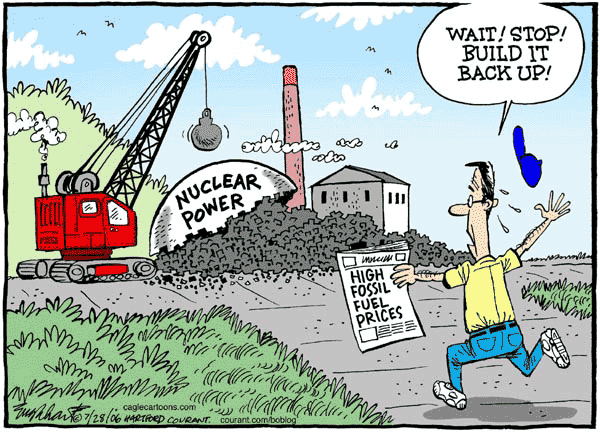
Adamantiadesa and Kessides discuss how the ever-increasing volatility of oil prices has meant renewed interest in nuclear power. New-age nuclear reactors are safer and simplier than their predessecors. The development of such technology addresses 'many of the public health and safety risks that plagued the industry since the accidents at Three Mile Island and Chernobyl', and as such 'these reactors may help break the current deadlock over nuclear power'. Whitfield et al. take this further suggesting that the negative view of nuclear energy is a product of percieved risk, and as this is high, explains the continued ambivalence towards nuclear energy. It seems as if technological progress in what is much safe is being held back by values and out-dated beliefs.
Fukishima however indicates the risks still involved when operating nuclear power stations. Should nuclear power stations be built on major plate boundaries? Probably not.
 |
| Source |
The major global benefit of nuclear power is the greenhouse gas output. It should not be assumed that because nuclear power doesn't burn fossil fuels it doesn't release greenhouse gases, I'd refer to my post on Hydroelectric power for evidence of that. Thankfully for nuclear supporters, Warner and Heath summarise that 'life cycle GHG emissions from nuclear power are a fraction of traditional fossil sources'.
Adamantiadesa and Kessides therefore conclude that nuclear power could play a large role in the battle to reduce greenhouse gases, but concede that safe disposal of waste and the potential for the technology to be convereted into nuclear weapons are sticking points that hold back nuclear energy, and aren't likely to disappear. A global solution of where to put nuclear waste and building of trust regarding nuclear weapons are sticking points, as well as safety concerns regarding their location, are in the way, but nuclear power certainly has the potential to become a large power in electrcity production.
 |
| Source |

This was a really interesting article - it's difficult to come to a decisive opinion on nuclear energy because the pros and cons you've laid out are all pretty convincing. I'm particularly concerned about the international security implications of nuclear technology, given the current political climate - so for that reason am tempted to favour renewable options. I have faith that at current rates of technological advancement, renewables will become increasingly economically viable and suitable alternatives- hopefully in the not too distant future
ReplyDeleteYes I think that's a huge issue. Iran, for example, maintains that it just wants to make use of nuclear energy. This has augmented well documented tensions between Iran and the West, and only today 10 US navy personal were being held by Iranian authorities (peacefully!). But that made the news. The ability to switch nuclear electricity capability to nuclear weapons is clearly an area of concern.
DeleteYou discuss this briefly but it would be interesting to gain some more information on the reasons why certain countries have a much greater uptake on nuclear energy than others, for example, the UK vs. France. On paper, they are quite similar so I would be interested to understand why their views on nuclear energy are so drastically different.
ReplyDeleteI think it's dictated by public opinion. In the UK we are rather anti-nuclear weapons. For example, Welsh sheep farmers had to (and it has now been shown to have been unnecessary) cull whole herds of sheep post Chernobyl. In France, the public is hugely accepting of nuclear power.
DeleteRegarding explaining why there is such a difference of opinion between two relatively similar countries, is difficult to put a finger on. I would see it as France is the exception, rather than the UK, with its full scale acceptance of nuclear power.