Tuesday, 12 January 2016

Thank you

The results from my poll show that most people think either nuclear or solar will be the largest source of electricity in 2050. Something tells me that perhaps the sample size was a little too small to draw any meaningful conclusions (I am aware that under my previous 'dynamic' template people were having difficulty finding the pole, apologies. I've now reverted to a 'simple' layout!)

My time blogging is unfortunately coming to an end. Although sceptical at first I've actually really enjoyed it, and I hope anyone that's read my posts has found equal enjoyment, and even better perhaps learnt something!


Source


Sir David Attenborough x President Obama


Now that's a collaboration. Two men in awe of each other for quite different reasons. 

I remember watching this documentary when it was released this summer. They cover a huge range of issues in this short twenty a minute interview (and I'm never quite sure who's interviewing who), but one of the main points they make is having the ability to store electricity. Our ability to do such is incredibly poor. If we can find a way of storing electricity, then many renewable electricity sources suddenly become much more viable. The issue with renewable electricity is you can't turn then on or off, up or down, when you want. It's there, and if you don't use it it's wasted, and if you want more you can't get it. 

I'd encourage anyone to watch this interview from two of the best and most significant voices of our generation.

Nuclear Nuclear Nuclear

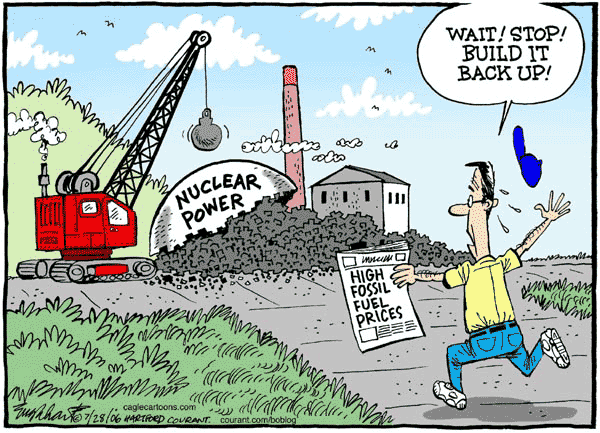
A form of energy I haven't touched on yet, symbolic of many states opinion of it: nuclear energy. Nuclear electricity production has long had a bad name, but is it justified?

Nuclear got off to a bad start. The Hiroshima and Nagasaki incidents were the first many had heard of producing energy from nuclear reactions. However, nuclear power uptake was significant post-World War II. The Three Mile Island accident of 1979 followed by the Chernobyl disaster of 1986 where the nails in nuclear's coffin. The US atomic bombs were deliberate attempts at mass destruction. However, these two accidents highlighted to the public the dangerous potential of nuclear cells when uncontrolled, resulting in it falling out of favour.

Since the 1990s the UK has not built a nuclear power plant, and currently has no plans to replace any of the current eight. These eight still provide 18% of our electricity, but most will be retired by 2023. The UK is aiming to construct more plants before 2030, but planning and construction requires years, and with no new plant switched on since 1995 it's perhaps looking unlikely. More recently, the 2011 Fukushima disaster will have further disheartened nuclear power to the general public. Furthermore, nuclear waste produces the infamous byproduct of nuclear waste. Disposal of this is a controversial issue, and one that anti-nuclear campaigners regularly voice their opinion on.

Source
So with such a blotted history, what part can nuclear power play our drive for more sustainable electricity production?

Currently, 11% of the world's electricity production is nuclear. The biggest producers of nuclear electricity are presented below by the International Energy Agency on page 17 of their document Key World Energy Statistics 2014:


While the US leads the way in absolute production, France produces a mammoth 76.1% of it's electricity from nuclear power. Although the UK hasn't had a new nuclear power station in over 20years, it still is the 5th highest in the world regarding % of electricity produced by nuclear. This is likely due to the level of scientific prowess required to harness nuclear energy; only a few countries have the technological capability. 

Having laid out the negatives of nuclear energy, and then shown that it makes up a significant proportion of many developed countries energy mix, the question is why?

Source

Adamantiadesa and Kessides discuss how the ever-increasing volatility of oil prices has meant renewed interest in nuclear power. New-age nuclear reactors are safer and simplier than their predessecors. The development of such technology addresses 'many of the public health and safety risks that plagued the industry since the accidents at Three Mile Island and Chernobyl', and as such 'these reactors may help break the current deadlock over nuclear power'. Whitfield et al. take this further suggesting that the negative view of nuclear energy is a product of percieved risk, and as this is high, explains the continued ambivalence towards nuclear energy. It seems as if technological progress in what is much safe is being held back by values and out-dated beliefs. 

Fukishima however indicates the risks still involved when operating nuclear power stations. Should nuclear power stations be built on major plate boundaries? Probably not.


Source

The major global benefit of nuclear power is the greenhouse gas output. It should not be assumed that because nuclear power doesn't burn fossil fuels it doesn't release greenhouse gases, I'd refer to my post on Hydroelectric power for evidence of that. Thankfully for nuclear supporters, Warner and Heath summarise that 'life cycle GHG emissions from nuclear power are a fraction of traditional fossil sources'.

Adamantiadesa and Kessides therefore conclude that nuclear power could play a large role in the battle to reduce greenhouse gases, but concede that safe disposal of waste and the potential for the technology to be convereted into nuclear weapons are sticking points that hold back nuclear energy, and aren't likely to disappear. A global solution of where to put nuclear waste and building of trust regarding nuclear weapons are sticking points, as well as safety concerns regarding their location, are in the way, but nuclear power certainly has the potential to become a large power in electrcity production.

Source

Sunday, 10 January 2016

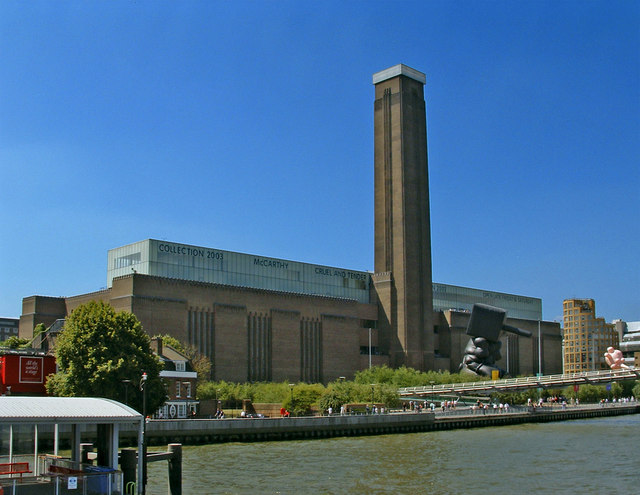
The Tate Modern

A couple of weeks ago in the Tate Modern was an exhibition entitled Energy and Process. The exhibit focuses on "artists’ interest in transformation and natural forces". One piece I found particularly striking, and relevant to my blog. 

Roger Hiorns: a British Artist nominated for the Turner Prize in 2009. In 2006 he created Untitled


The Tate Modern summarises the sculpture as:
A BMW car engine covered in bright blue copper sulphate crystals, held aloft on top of two steel poles that rise vertically from a three-sided steel pedestal. Between two steel shelves within the pedestal lies a smaller, detached segment of the engine, which is also covered in blue crystals. Hiorns created the crystals by placing the engine parts inside a tank filled with copper sulphate solution to initiate a chemical reaction that produced the brilliant blue surface accretion. Over time the colour will lose its saturation as the crystals dehydrate. 
I think the sculpture is an interesting twist on the relationship we have with nature. Global environmental change has occurred over the past few hundred years on a massive scale. This has led us to engulf and transform natural processes and alter the world we live in. Here, I think Hiorns has reversed this process. Hiorns has grown crystals to engulf, and make unusable, a car engine; an object symbolic of humans dominance over our planet. 

Hiorns reversal of what we are doing to the planet, whether he intended for me to interpret it as I have or not, is brilliant. 

This work directly relates to future electricity supply. In providing electricity supply we have dominated the physical environment we live in and are now morphing it at catastrophic rates. The slowing of this process is vital to prevent Earth from becoming unusual and completely engulfed, as this engine has been. Over time, the crystals will begin to lose their colour, which could relate to the potential for us to reverse the damage we have caused.

Following the 'Symphony' regime I spoke about previously in my blog can achieve electricity production without destroying the Earth, the reverse (Jazz) could have serious consequences.

The Tate Modern (Source)

Guardian Quiz

Here's a quiz I found on the Guardian about COP21: 'The Hardest Climate Change Quiz Ever'.

Although it's happened, I thought it would still be fun to post to test your knowledge post-negotiations.

With a couple of lucky guesses, I managed to fluke 7/10.

Saturday, 9 January 2016

Happy New Year

Bit of a late one from me, I was fortunate enough to have been in Tignes since New Years Day with the UCL Ski Trip. 


When we first arrived I was greeted with the classic 'You do geography, how can global warming me true with these temperatures?'. Having laughed it off, I hope that statement was meant as seriously as I took it. 

But, having skied a couple of days the conservation switched to 'You do geography, is global warming the cause of such bad snow?'. The snow this year across the Alps has been terrible, we were lucky it chucked it down during our week because it was incredibly thin on the ground, especially for the start of January (I'm going off what I've been told here, I'm not an experienced skier). Note that the top photo you can actually see the grass in the foreground.

One year and one observation is obviously no bearing and cannot be presented as evidence. But it is interesting to hear experienced skiers talk about how bad the snow was, and makes you wonder what effect we're having on the world. Our electricity production methods, and transport, are at the heart of global warming and potentially driving a change which we are seeing on the ground. Again, it should be noted there is also annual variation so one year is not evidence.

On a happier note, 2015 has seen a hugely successful COP compared to other years and hopefully we will have snow to ski on for many years to come, Happy New Year.

Wednesday, 30 December 2015

Hydroelectric Power Potential


Hydroelectric power has huge potential to produce electricity at specific sites where water traverses a large height difference, and therefore loses gravitational potential energy. Through the driving of turbines this energy can be converted into electricity. 

From purely a renewable electricity production view point hydroelectric has huge potential to form part of a sustainable future electricity mix. WorldWatch Institute state that 16.1% (3427 terawatt-hours) of global electricity production is currently from hydroelectric power. Five countries produce 52% of this 16.1%: China, Brazil, the United States, Canada and Russia. There are currently three hydropower dams larger than 10GW: The Three Gorges (China), Itaipu (Brazil) and Guri (Venezuela).
Guri Dam, Venezuela (Source)

The Three Gorges Dam, China (Source)
Itaipu Hydroelectricity Power Plant, Brazil (Source)


Four countries, although small, produced 100% of their electricity from hydroelectric power as far back as 2008! The countries leading the way on the hydroelectric front? Albania, Bhutan, Lesotho and Paraguay. Fifteen other countries generated over 90% from hydroelectric power. Unsurprisingly, the most hydroelectric power produced per/capita are countries with mountainous terrain and significant snow melt to drive the dam, New Zealand, Iceland and Norway.

So why are countries already opting to go full throttle on hydroelectric powers? Firstly, it's relatively cheap costing between 6-10p per kilowatt-hour for a hydro plant larger than 10MW. Hydro power also provides electricity security and it is produced 'in-house', unlike fossil fuels where many states rely on others for their electricity production. Hydropower also enables very fast increases in power production to deal with peaks in demand, whereas fossil fuel power stations can take hours and some other renewables cannot increase production at all.  Due to these characteristics Kosnik concludes that a strong case can be made for using hydroelectric power in USA to fight global warming.

However, it's not all plain sailing for hydroelectric power. Damming majorly interrupts local and national ecosystems preventing the migration of fish. For rivers with multiple dams, this practically destroys any hope of a healthy ecosystem as species became increasing dispersed with ever-decreasing gene pools. Building of dams also displaces people and terrestrial wildlife, see the Three Gorges Dam for an example of this on a huge scale. A further issue with the Three Gorges especially is it flooded mines which results in leakage of toxic chemicals into the water. Dams also trap sediment. Firstly, this means that the capacity of the dam will decrease if it is not regularly dredged. Secondly, it deprives downstream communities of silt which is vital to keep land fertile. Furthermore, dams can stop flooding downstream (unless a natural flood regime is mimicked), which may be vital to local economies downstream. The immobility of hydroelectric dams is also an issue. As explored by Whittington and Gundry hydroelectric plants are often justified on long-term economic calculations. With global climate change altering precipitation patterns, it is worth considering in a proposal what might happen to such rainfall patterns in the future. Given the huge development of dams across the world it seems inevitable there will be abandoned dams where rains have moved on. For example, see how many dams have been constructed in the USA alone:


Amid all the above local impacts, I'd like to focus on a global impact of hydroelectric dams, and that's the emissions from dams. Dams flood vast areas of land that was not previously flooded. This newly created water-land interface is the location of chemical reactions and decomposition. Fearnside explains that carbon dioxide is emitted from the decay of trees left standing in the newly formed water mass, whilst methane is emitted from the decay of soft vegetation at the bottom of the lake (this is especially prevalent for macrophytes and plants in the drawdown zone which floods when the water level rises). Fearnside ascertains that because of this dissolved methane levels are highest at the bottom of the reservoir. Some methane is released through bubbling, but mainly from the water traversing the turbines and spill way. As water is drawn from sufficient depth, this results in large methane concentrations. Fearnside studied the Curuá-Una dam in Brazil. He found that in 1990 after 13years of production the Dam had 'emitted 3.6 times more greenhouse gases than would have been emitted by generating the same amount of electricity from oil'. Rudd et al. found similar patterns of high Carbon Dioxide and Methane emissions from a Quebec reservoir. At most sampling sites, Rudd et al. found that Carbon Dioxide were 2-3times equilibrium levels, whilst Methane levels had 'concentrations higher than in natural, stratified Canadian shield lakes'.

This is only two dams, so covering Barros et al.'s research in Nature on 85 globally distributed dams accounting for 20% of total hydroelectric dam area gives a broader perspective. Total reservoirs from hydroelectric dams cover 3.4×10⁵ km2, about 20% of global reservoirs. Previous research from St Louis et al. suggests that 321Tg of Carbon/year are emitted from such reservoirs. Barros et al. estimate that 48Tg of Carbon as Carbon Dioxide is emitted from hydroelectric dams, and 3Tg of Methane. More limited data is cited as the reason for lower estimates than previously produced by St Louis et al. Barron et al. found that the highest emissions were from Amazonia, understandable for the mass of vegetation/biomass that will have been flooded to create dams. 

Such evidence is damning (intended) for the case of hydroelectric power. Hydroelectric power plants are often marketed as positive for the environment, but this is not the case on a global scale. The common opinion that dams reduced greenhouse gas emissions, and hence global warming, is clearly misconceived. Dams produce significant amounts of Carbon Dioxide and Methane, whilst also having a very long list of negative impacts as listed above. The positives of dams for a single country however do remain larger, they produce electricity within the state at a low cost and production can be ramped up quickly. Hence, dam construction is likely to continue as governments place economic and energy security high on the agenda.

Source